Haiku & Reflections from Japan: The Ritual of Raku Ware


Longtime UNS Member, Sharon Meyers, is currently living in Japan for several months. This is a glimpse into her world and journey.
Gentle warmth of tea
served, shared, savored, host for guest
one unique moment
Japan is the birthplace of cha-no-yu, a culture of hospitality. extended from host to guest over a bowl of tea.
The esthetic value of cha-no yu was defined by tea master, Sen No Rikyu in the 16th century. Called wabi cha, it refers to a shared moment of simplicity and silence, closely linked to the philosophy of Zen. When Rikyu asked a ceramic tile maker to form and fire a tea bowl for his guest, raku ware became the embodiment of wabi-cha, which has remained pure through centuries of generations in Kyoto.
Raku ware is made by hand, each designed to fit the palm of the person who will use it. Each bowl, each firing is therefore considered unique, harnessing the beauty of nature and the power of fire and heat.
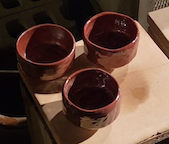
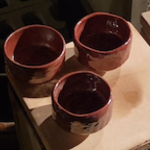
Offered the opportunity to create two raku tea bowls, I was able to experience the full process from a 7 th generation Raku Master in his family’s historic studio. I crafted my bowls in the spirit of wabi cha, and in the traditional approach of tezukune, formed by pinching the clay into the desired shape and thickness to fit my cupped palm. Each bowl reflected a symbolic coloration – red and black. Red glaze of a vibrant, yet dark tint, suggests the richness of the earth. Black glaze is redolent of deep urushi black lacquer and hints to the infinite depths of space.
Kilns for raku ware are small, and bowls are fired in very small batches: red for 30 minutes, black for only 5 minutes. Once removed from the kiln, the bowls cool rapidly, showcasing a softly textured surface, and a gentle melodic pinging sound as they adjust to the cooler environment. CLICK HERE TO HEAR THE SOUND.
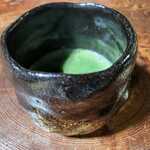
Using raku ware provides such sensual delight. The traditional red and black glaze of the tea bowl contrasts with the verdant green hue and scent of freshly made matcha. This essence of wabi cha can be considered a meditative experience, reflected in the saying ichiga ichie – one occasion, one unique moment.
When was the last time you savored a moment of shared simplicity and silence?
Arigato,
Sharon

-
Our Home