Breadcrumbs in the Bardo

I'm thinking about... survival, and surviving. Which are two very different things. Survival is a Hollywood blockbuster story of victory. Surviving is a quiet story of grit, exhaustion, and desperation. If survival is the triumphant end of the story, surviving is the means by which we get there.
A couple months ago, in the midst of my own season of surviving, I read a post on Instagram from director Joey Bania: "[W]ho are the ghosts haunting us as we move between place and displacement? Caught between past and present [the artist] explores the meaning and the price of survival."
The first half of that quote (about ghosts) didn't particularly resonate with me. But the "meaning and price of survival" caught my attention, as I was pondering my own present state of affairs.
For the next two months I continued on with my surviving. Every time I thought I had "survived" life would throw yet another plot twist at me, in which I found myself once again surviving. My mind returned often to Bania's quote. And then, through the happenstance that is Divine Order, the Universe handed me Lincoln in the Bardo, by George Saunders.
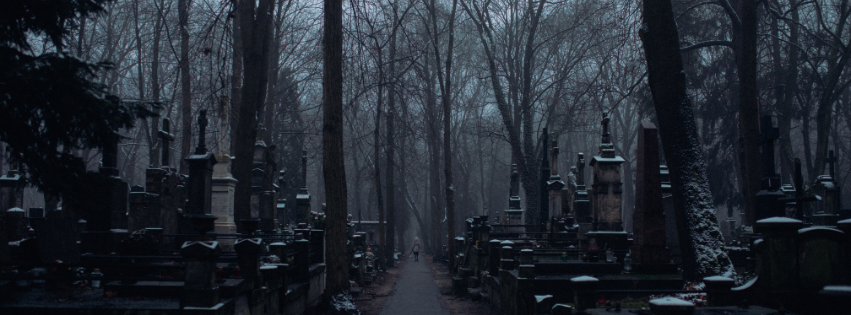
In this fictional novel a cemetery comes alive at night with the ghosts of those trapped in the bardo (a Tibetan term for the liminal space between life and death). Over the course of the single evening in which the book takes place, President Lincoln, deep in mourning, visits the grave of his recently deceased son. The ghosts refuse to move on because they are still clinging to their old lives and their old identities. We are left wondering if Abraham Lincoln will now remain in a living bardo of sorts, stuck forever in his grief. All the characters in this book, alive and dead (of which there are many), are wrestling directly with our question: what is the meaning and the price of survival?
I found the story deeply moving. It's the kind that sticks with you long after you close the cover. The grief and suffering of the ghosts and Mr. Lincoln alike were palpable.
But there is a hidden story here: The Universe had closed a loop for me and answered a question. As I was struggling to understand the significance of "who are the ghosts haunting us as we move between place and displacement?" God directed me, through a series of seemingly disconnected events, to pick up this odd little book. The story is, quite literally, about ghosts stuck in the space between place and displacement. The bardo represents a space between who we are, and who we are becoming. This is a story about the human challenge to accept what is so overwhelmingly evident, make our peace with it, and move on.
Maybe you aren't following my train of thought. Maybe my description of the book isn't making sense. That's ok: the takeaway here is that the Universe leaves breadcrumbs and closes loops. When we are in the thick of our surviving, struggling to find the 'why,' the Universe is already pointing the way. Always. For me, personally, the breadcrumbs (this time) led to the conclusion that if surviving is the struggle, survival is the surrender.
If you would like to further explore this lonely and isolating space of surviving, I invite you to examine these two additional resources from the vast library of the Universe:
-
Wander Alone: This ten-minute video by photographer Justin Mott documents the last two living Northern White Rhinos. Most rhinos are solitary animals. But, (ironically?) the Northern White Rhinos are not. There are only two of them in the world, but they crave companionship. They (mother and daughter) are, gratefully, together. But one day that will no longer be the case. One will pass on. And the other - the survivor - will be left, alone. Will that be her triumphant ending? Is it really a story of survival to be the last one standing? It's unbearably lonely to even consider it. (Side note: Joey Bania, quoted above, collaborated with Mott on this piece.)
-
We Were Lost in Our Country: This film from Tuan Andrew Nguyen documents the process of Aboriginal peoples in Australia painting a large canvas map (from memory) of their lost native lands (Country). Interviews in the film feature an elder generation of people who were raised in Country, and a younger generation of nearly-grown grandchildren who were raised away from Country. The map becomes a vehicle for facilitating conversation between past, present, and future generations. The film is hauntingtly beautiful. There is a tangible underlying loneliness, and it begs the question: Is survival simply keeping the culture alive, or is it the painful act of surviving the loss of the land itself? (Side note: This film is on display at the Art Institute of Chicago through Sunday. You can view it online, but the in-person option provides a more immersive experience.)
I hope you find joy in the act of exploring this less-than-joy-filled topic. I know I did. Maybe that's the point.

-
Our Home